
Can I Use AI Video Commercially?
on 2 days ago
Can I use AI video commercially? Often, yes, provided your generator's terms allow the intended use and you have the necessary rights to the material in the finished video. A downloadable file or paid subscription alone does not answer every rights question.
For an advertisement, paid course, client project, or monetized channel, separate the provider's license from copyright, permissions for people and assets, and distribution rules. This guide explains those checks, using U.S. copyright and advertising guidance where specified. It is general information; local law and your contract may require a different assessment.
Can I use AI video commercially? Often, yes, if your service permits the intended use and you have the necessary rights to everything included. Permission to generate a clip is only the starting point. Before using it in an ad, paid course, or client project, check the output license, source assets, consent, and disclosure requirements. This guide uses U.S. copyright and advertising examples; rules elsewhere can differ.
Can I use AI video commercially under my tool's license?
Commercial use means using a video for business or revenue-related purposes, such as promoting a store, delivering client work, or including footage in a paid product. You do not need to charge viewers directly for a use to have a commercial purpose.
Start with the terms attached to the service and plan that produced the clip. Look for provisions about output, commercial use rights, redistribution, prohibited uses, and termination. An ownership clause can coexist with restrictions elsewhere in the agreement.
HeyGen illustrates why plan details matter. Its Terms of Service give Creator, Pro, and Business users rights in output as between the user and HeyGen, with commercial use permitted subject to the terms. Free-plan output is restricted to personal, noncommercial, and internal evaluation uses; advertising, client work, and monetization are expressly excluded. These are HeyGen's rules, not a universal standard.
Do not assume that upgrading later clears an earlier free export. Ask the provider whether existing files receive new rights or whether you must generate them again. Save the answer alongside the applicable terms. For an agency, also establish whether delivery to a client is permitted and whether the client needs its own license.
Commercial permission and AI-generated video copyright are different
A provider's permission to sell a clip does not establish that the clip qualifies for copyright protection. A buyer asking for exclusive footage needs to understand whether competitors could use similar material.
The U.S. Copyright Office's copyrightability guidance centers on sufficient human authorship. It says prompts alone do not establish copyright in the resulting output. Human-authored expression, creative arrangements, or modifications may qualify, depending on the work. Using AI within a larger human-created work does not automatically disqualify that work.
For example, an advertisement may combine generated background footage with your original script, recorded narration, and creative editing. Those contributions need a separate assessment from the generated frames. Avoid promising exclusive copyright over every element just because you assembled the export.
Keep scripts, project files, and edit histories if ownership matters to the deal. These records help explain what you contributed; they do not guarantee protection. For an exclusive campaign or a copyright registration, get advice tailored to the work and jurisdiction.

Check the assets, faces, and voices inside the video
Review each ingredient separately. AI video licensing cannot resolve an unrelated restriction on a reference photo, soundtrack, or person's likeness.
Imagine a product advertisement built from a photographer's image, generated camera movement, a music track, and a cloned presenter voice. Before delivery, ask whether the photo permission covers uploads and adaptation, whether the music license covers paid advertising, and whether the presenter authorized the proposed voice use. Resolve unclear permissions before scheduling the advertisement.
HeyGen's terms, for example, make users responsible for third-party rights and required permissions. They also state that owning a recording does not itself establish permission to clone the speaker's voice. When requesting consent, describe the proposed synthetic use, campaign, channels, duration, and any client access so the person can assess it.
For music and stock assets, read the actual license rather than relying on a label such as “royalty-free.” Check the permitted placements, attribution conditions, and any restrictions on redistribution. Keep receipts and license copies with the project.
During visual review, look for unintended brand marks, recognizable characters, and people who resemble someone real. Replace questionable material or obtain appropriate review. A frame-by-frame inspection is a practical screening step, not proof that every possible claim has been cleared.
Disclosure and advertising rules still apply
A commercial license does not decide how you may present the finished video. Check both the destination platform's policies and the laws relevant to your audience.
YouTube's disclosure policy requires disclosure for realistic generated or meaningfully altered content, including depictions of events that never happened or real people doing things they did not do. Minor edits and clearly unrealistic scenes can be treated differently. YouTube also says disclosure alone does not affect monetization eligibility; it does not promise that every disclosed video will earn revenue.
Advertising claims need their own review. The FTC's guidance on reviews and testimonials explains that an AI avatar may function as a testimonial depending on its presentation. Fake or false testimonials can violate the rule, and an actor portrayal may still be deceptive under the FTC Act.
A synthetic spokesperson explaining a product should not be scripted as a customer who personally used it if that experience is invented. An AI label does not make a fabricated customer story truthful. Ask what the viewer is likely to understand, then revise the script and disclosure together.
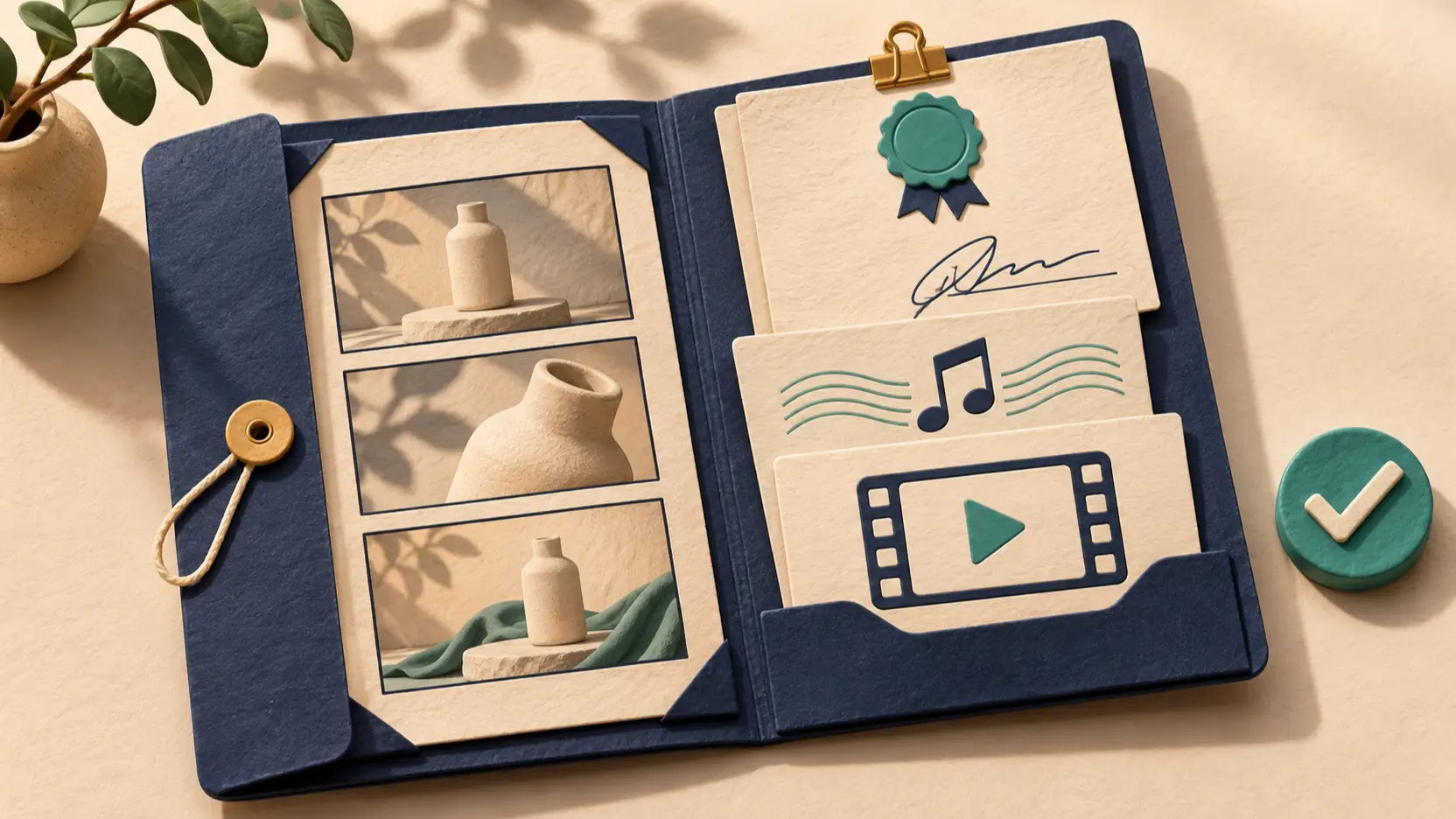
Build a rights file before delivering client work
Use a short release checklist while the source files are easy to find:
- Record the generator, model, plan, generation date, and applicable output terms.
- List uploaded assets and keep their licenses or permissions.
- Store relevant face and voice consent with its scope.
- Review the final picture, soundtrack, captions, and claims.
- Check the destination's disclosure requirements and record your decision.
- Tell the client which assets carry restrictions and what rights you can actually provide.
This is an editorial workflow recommendation, not a legal certification. Use it to catch unanswered questions before someone schedules the campaign. Keep the record with the exact export delivered, especially if later versions change the music or presenter.
For production planning, Picir's Sora 2 prompting guide can help you describe scenes. The Marketing Studio guide covers another creative workflow. Use those guides for making content, then assess the chosen service's permissions separately.
FAQ
Can I sell AI-generated videos to clients?
Often, yes, when the applicable license permits client delivery and commercial use. Confirm what the client may do with the files, clear included assets, and describe any limits in your agreement. Avoid promising exclusivity you cannot substantiate.
Can I use a free AI video generator for business?
Possibly, but check that specific plan's terms. Free access does not establish commercial permission, and paid access does not remove every restriction. HeyGen's current free-plan restriction is one concrete example of why the plan used for generation matters.
Does adding an AI disclosure clear copyright or consent issues?
No. Disclosure tells viewers something about how content was made. It does not obtain a music license, authorize voice cloning, or establish copyright ownership. Handle permission and truthful presentation as separate parts of the release review.
Conclusion
Can I use AI video commercially? The practical answer depends on the license, the assets and people involved, and the way you distribute the result. Before handing over a final file, keep a record of permissions and resolve any gaps. That gives you a specific basis for approving the video for its intended use.